Legacy VDR vs AI Virtual Data Room: 2026 Gap

The Sell-Side Shift That’s Exposing Your VDR’s Weaknesses
A founder I spoke to last month closed a $180M carve-out. Clean process. Good buyer. And then the post-close invoice from their legacy VDR landed — $34,000 in page-based overage fees nobody had budgeted for. The deal was done. The money was wired. And everyone was still furious about a software bill.
That’s the conversation I keep having in 2026. Not about whether to use a data room. About whether the one you’re defaulting to is quietly working against you.
Sell-side processes have gotten sharper. The best-run deals now start with sellers who arrive organized — vendor DD reports prepared upfront, rooms fully populated before the first buyer NDA is even countersigned. It compresses timelines. It signals a serious operator. And it’s becoming the baseline expectation, not a differentiator.
But here’s what most people miss: the platform you run that room on either holds that advantage together — or lets it bleed out slowly under scrutiny.
Most deal teams still default to familiar names. Intralinks. Datasite. Firmex. Ansarada. They’ve been around long enough that picking them feels safe. In 2016, it probably was. This isn’t 2016.
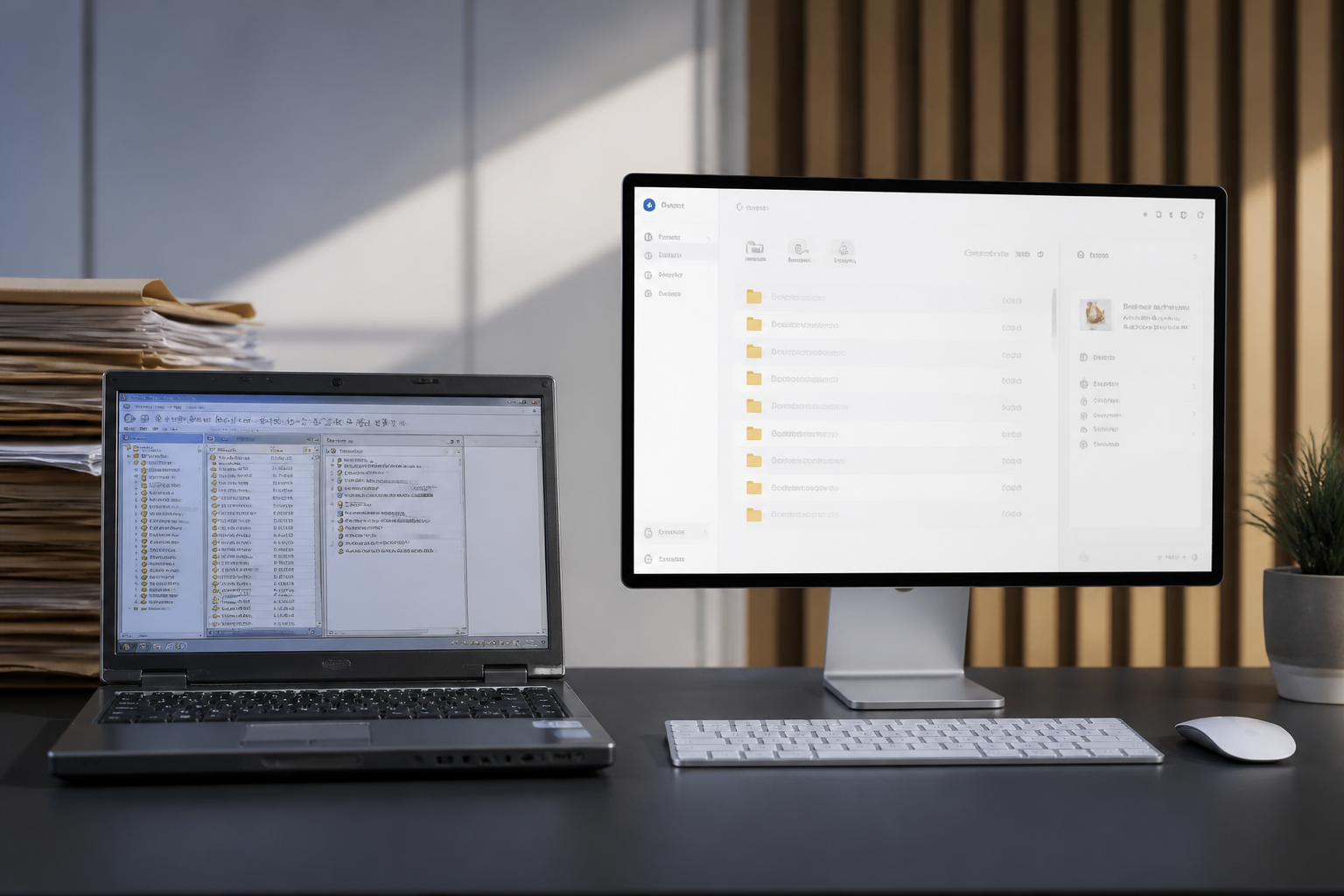
What a Legacy Virtual Data Room Actually Costs You
The pricing shock is usually what opens the conversation. But pricing isn’t actually the worst part.
Setup time is.
I’ve seen deals fall apart — or at least seriously wobble — because of this. A PE firm in Chicago needs a data room live for a carve-out by Thursday. They call their legacy rep. “Allow 3–5 business days.” That’s not a scheduling inconvenience. That’s a real problem when the window between NDA and first buyer access should be measured in hours.
A modern AI virtual data room built on current infrastructure can be live the same afternoon you decide to use it. AI-driven auto-categorization handles the folder organization that used to take a paralegal two full days of manual sorting. And when you’re running a hard timeline, that matters enormously.
Most legacy VDRs are just glorified Dropbox folders with a permission layer bolted on. Sorry, but it’s true.
Five Areas Where AI-Powered VDRs Pull Ahead
Here’s the honest breakdown across the things that actually move deal outcomes:
- Setup speed. Legacy VDR: 3–7 days, often requiring vendor-side hand-holding to get going. AI virtual data room: same-day launch, documents auto-organized into logical structures on upload. No vendor calls. No waiting.
- Document intelligence. Legacy platforms give you folders, filenames, and basic keyword search. That’s it. An AI VDR does full-text semantic search, auto-tags by document type, and flags missing diligence items before a buyer finds the gap first. A London law firm running cross-border due diligence on a target with 4,000+ documents doesn’t have the bandwidth to manually tag every exhibit. Nobody does.
- Q&A management. The Q&A module on most legacy platforms feels like it was designed by someone who has never been in week three of a live deal. Questions float, answers get buried, nobody can find which document version a question even references. AI VDRs auto-link questions to source documents and draft suggested answers from the underlying data. When buyer’s counsel in Singapore asks at midnight for that one amendment to the IP licensing agreement… the difference is not subtle.
- Pricing transparency. Page-based overages compound fast — especially on active processes with heavy document traffic. Flat, predictable pricing isn’t a nice-to-have. A Series B startup sharing financials with 12 investors shouldn’t be staring at a discovery surcharge on their fundraising data room. And yet.
- User experience. Most legacy platforms are built like it’s 2010. Dense UI, counterintuitive navigation, mobile access that’s clearly an afterthought. And here’s what that actually costs you: when buyer’s counsel is frustrated by the interface, they slow down. Slower review means more questions. More questions means longer timelines. UX friction has a real dollar cost — it just shows up on the timeline, not the invoice.

Where Legacy VDRs Still Win — Honestly
Fair is fair. Institutional relationships matter. Some bulge-bracket banks have Intralinks or Datasite locked into enterprise procurement agreements — and nobody’s reopening that contract mid-deal. That’s a real constraint, not a marketing problem.
And for the truly massive processes — a $5B public-company acquisition running 50+ bidders across 12 jurisdictions — some legacy platforms have custom workflow tooling built exactly for that scenario. The integrations run deep. That’s a legitimate edge.
But that’s the exception. For the vast majority of transactions — mid-market M&A, growth equity, real estate, cross-border minority investments — the premium you pay for a legacy brand name buys you slower setup, a worse interface, and an invoice you’ll argue about in post-close. That’s the actual trade.
The Datasite Alternative Worth Evaluating
SmartVDR was built around the friction deal teams actually hit. Not theoretical pain points — the real ones. The upload that fails at 11 PM the night before management presentations. The buyer who can’t find the material contract because the folder structure was built by someone who left the firm. The Q&A thread that loses track of which document version a question references.
AI-powered document intelligence means the secure data room does more than store files. It reads them. Flags gaps. Surfaces risks. Connects questions to source documents. As a virtual data room for M&A built for serious transactions, SmartVDR gives deal teams the full control set — granular permissions, comprehensive audit trail, dynamic watermarking — without the enterprise procurement cycle or the surprise invoice.
If you’re evaluating a Datasite alternative, an Intralinks alternative, or a Firmex alternative, the question isn’t just price. It’s: does this platform make my team faster? Does it catch what humans miss at 2 AM in week four of diligence? That’s where the real gap is showing up in 2026.
Frequently Asked Questions
What is an AI virtual data room?
An AI virtual data room is a secure document-sharing platform that uses artificial intelligence to automate document organization, flag missing diligence items, enable semantic search across deal documents, and surface risk signals inside contracts and financial records. Unlike traditional VDRs that simply store and share files, an AI virtual data room actively assists deal teams throughout the review process — reducing manual work and compressing timelines.
How does a modern AI VDR compare to Datasite or Intralinks for M&A?
Modern AI-powered platforms like SmartVDR offer faster same-day setup versus 3–7 days for legacy platforms, more intuitive UX, transparent flat pricing without overage fees, and built-in document intelligence that legacy VDRs charge extra for — or simply don’t offer. For mid-market M&A and fundraising transactions, the performance and cost gap is significant. Legacy platforms retain their hold at the largest banks, but the case for modern alternatives has become hard to ignore.
How much does a virtual data room cost in 2026?
Legacy virtual data room pricing — Datasite, Intralinks, Firmex — typically runs $1,500–$10,000+ per deal, with page-based overages that inflate the final invoice significantly on active processes. Modern AI-powered platforms offer flat per-deal or annual pricing, often 40–60% less for equivalent or better functionality. SmartVDR’s pricing is straightforward — no per-page fees, no surprise charges at deal close.
Is a virtual data room secure enough for confidential M&A documents?
Purpose-built virtual data rooms use bank-grade encryption — AES-256 at rest, TLS in transit — granular user permissions, dynamic watermarking, and full audit trails. That makes them far more appropriate than general file-sharing tools like Dropbox, Google Drive, or SharePoint, which lack deal-specific access controls and the activity logging that legal teams actually require. A secure data room built for transactions is the right infrastructure for confidential M&A, fundraising, and legal diligence. Full stop.
Ready to run your next deal on a smarter data room? Visit SmartVDR.com to see how AI-powered document intelligence can close your deals faster.